Product Categories
PRODUCT CATEGORYContact Us
CONTACT USMobile phone:+86-15395152932
mail:jingliuup@outlook.com
Address:Electronic Information Industrial Park, Shunyi District, Beijing City
How does the Energy Storage Drawer Assembly Line test slide rails for long service life?
Advanced Manufacturing for Battery Energy Storage Systems
Introduction
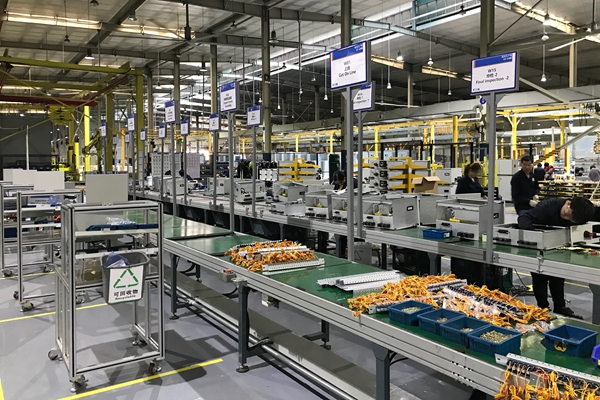
Modern manufacturing demands precision, efficiency, and scalability. At the heart of these requirements lies the assembly line, a systematic production methodology that has revolutionized industrial manufacturing since its inception. Our company specializes in designing and building advanced assembly lines tailored to the evolving needs of the energy storage industry. The image presented here showcases one of our flagship installations: an Energy Storage Cabinet Drawer Assembly Line, engineered to meet the rigorous standards of contemporary battery energy storage system manufacturing.
Assembly Line Architecture and Layout
Linear Progressive Configuration. The assembly line depicted in the photograph exemplifies a linear progressive assembly configuration, one of the most widely adopted layouts in discrete manufacturing. The line is structured as a series of sequential workstations arranged along a continuous conveyor belt system. This linear arrangement ensures that components move smoothly from one operation to the next without backtracking or cross-traffic, minimizing material handling time and reducing the risk of work-in-process inventory accumulation.
Modular Conveyor Design. The conveyor system itself features a modular belt design mounted on an aluminum extrusion frame. This modularity allows for rapid reconfiguration should production requirements change, a critical advantage in an industry where product specifications evolve frequently. The green anti-static work surface integrated into the conveyor provides both electrostatic discharge protection and a visually distinct zone for component placement, enhancing operator ergonomics and product safety simultaneously.
Overhead Infrastructure. Overhead, the structural steel framework supports not only the facility’s roof but also an integrated overhead material delivery system. Yellow-painted gantry structures visible in the background facilitate the movement of heavier subassemblies between stations, reducing manual lifting and improving workplace safety compliance.
Workstation Design and Process Segmentation
Task Specialization. Each workstation along the line is clearly demarcated and equipped for a specific assembly operation, as indicated by the overhead signage displaying station identifiers. This process segmentation approach, dividing the total assembly into discrete, manageable tasks, is fundamental to assembly line efficiency. By limiting the scope of work at each station, operators develop specialized expertise, cycle times become predictable, and quality control checkpoints can be integrated naturally into the flow.
Ergonomic Fixturing. The workstations incorporate height-adjustable fixtures and tool boards, allowing operators to position components and tools within optimal reach zones. This attention to ergonomic design reduces operator fatigue and contributes to consistent output quality over extended production shifts. The blue component bins arranged at each station follow lean manufacturing principles, ensuring that fasteners, connectors, and small parts are readily accessible and inventory levels are visually monitored.
Material Flow and Logistics Integration
Mobile Material Cart. A critical yet often underappreciated aspect of assembly line design is the material logistics subsystem. The image reveals a rolling material cart positioned adjacent to the line, labeled for waste segregation. This mobile storage unit serves dual purposes. It delivers replenishment components to stations as needed, supporting a just-in-time or kanban material flow strategy. It also collects recyclable packaging and production scrap for proper disposal. This closed-loop logistics approach keeps the work area uncluttered and supports environmental compliance objectives.
In-Process Subassemblies. The orange cable harnesses visible on the conveyor represent in-process subassemblies being advanced through the line. These pre-kitted harness bundles demonstrate the line’s capability to handle complex electrical integration tasks, an essential requirement for energy storage systems where wiring integrity directly impacts safety and performance.
Quality Assurance and Traceability
In-Line Verification. Energy storage systems operate under demanding electrical and thermal conditions. Consequently, manufacturing quality cannot be compromised. Our assembly lines incorporate in-line quality verification stations at strategic intervals. While not explicitly visible in this image, the standardized workstation layout accommodates the integration of torque monitoring tools, electrical continuity testers, and vision inspection systems.
Full Traceability. Each completed drawer assembly can be assigned a unique serial number and associated with operator and process data, establishing full manufacturing traceability from raw component to finished product. This traceability infrastructure supports warranty management, field failure analysis, and continuous improvement initiatives.
Scalability and Future-Proofing
Adaptable Architecture. The energy storage market is characterized by rapid technological advancement and fluctuating demand. Our assembly line designs address this volatility through scalable architecture. The modular conveyor sections can be extended to add workstations. Throughput can be adjusted by modifying conveyor speed and staffing levels. The open framework supports the retrofitting of automated equipment, such as robotic pick-and-place systems or automated guided vehicles, as capital investment and production volumes justify.
Investment Protection. This future-proofing approach ensures that our clients’ initial capital investment remains productive through multiple product generations. As battery technology evolves and new form factors emerge, the assembly line can be reconfigured rather than replaced, preserving both financial and operational continuity.
System Design Highlights
Conveyor Type. Modular belt system on aluminum extrusion frame provides rapid reconfiguration capability and ESD protection through green anti-static work surface.
Line Configuration. Linear progressive layout with sequential workstations eliminates backtracking and cross-traffic while supporting predictable cycle times.
Workstation Features. Height-adjustable fixtures, tool boards, and blue component bins optimize operator ergonomics and support lean material management.
Overhead Infrastructure. Yellow-painted gantry structures and steel framework enable heavy subassembly transport and reduce manual lifting requirements.
Material Logistics. Rolling material carts with waste segregation labeling support just-in-time delivery and environmental compliance simultaneously.
Quality Integration. Standardized station layout accommodates torque monitors, continuity testers, and vision systems for in-line verification.
Traceability System. Unique serial numbering with operator and process data association enables full manufacturing traceability from component to finished product.
Scalability Approach. Modular conveyor sections, adjustable throughput, and open framework support future automation retrofitting and product evolution.
Conclusion
The Energy Storage Cabinet Drawer Assembly Line represents more than a collection of conveyor belts and workstations. It embodies a systematic engineering approach to manufacturing optimization. From its linear progressive layout and ergonomic workstation design to its integrated logistics and quality assurance capabilities, every element serves a defined purpose in the pursuit of operational excellence.
As the global transition to renewable energy accelerates and demand for battery storage systems intensifies, assembly lines of this caliber provide manufacturers with the production infrastructure necessary to compete on quality, cost, and delivery performance. Our commitment to advancing assembly line technology ensures that our partners remain at the forefront of this critical industry.