Product Categories
PRODUCT CATEGORYContact Us
CONTACT USMobile phone:+86-15395152932
mail:jingliuup@outlook.com
Address:Electronic Information Industrial Park, Shunyi District, Beijing City
Can the Low Voltage Cabinet Assembly Line produce Electrical, capacitor and incoming cabinets together?
Introduction
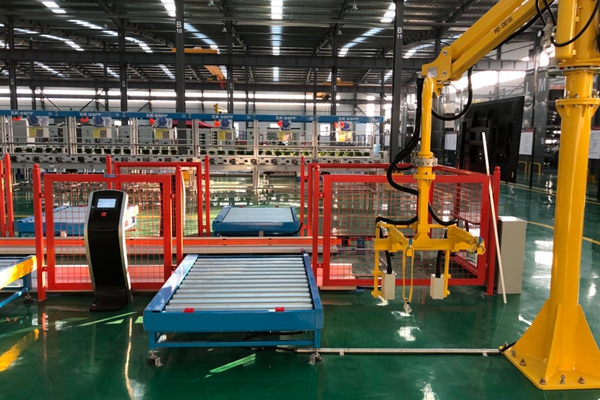
The manufacturing of low-voltage switchgear represents one of the most demanding segments of electrical equipment production. These assemblies serve as the critical distribution and control nodes within Electrical systems, protecting circuits, managing loads, and ensuring operational safety across industrial, commercial, and infrastructure applications. Our company specializes in the design and construction of advanced assembly lines engineered specifically for this sophisticated product category. The image presented here illustrates one of our most capable installations: a Low-Voltage Switchgear Assembly Line, purpose-built to handle the substantial size, weight, and complexity inherent to electrical panel manufacturing.
Assembly Line Architecture and Heavy-Duty Conveyor Systems
Robust Linear Configuration. The assembly line shown in the photograph employs a robust linear conveyor configuration fundamentally distinct from lighter-duty assembly applications. The prominent blue roller conveyor platforms visible in the foreground are engineered to support the considerable mass of switchgear enclosures and populated panels, which can range from hundreds to thousands of kilograms depending on configuration. These heavy-duty roller conveyors feature hardened steel rollers mounted within reinforced steel frames, providing the structural integrity necessary for continuous operation under significant mechanical loading.
Advantages of Roller Conveyors. Unlike belt or chain conveyors suited for smaller components, roller conveyors offer distinct advantages in switchgear manufacturing. They provide point-contact support that minimizes friction during manual positioning or powered advancement. They allow operators to rotate and maneuver large panels with relative ease. They accommodate the irregular bottom profiles common to welded enclosure frames. The conveyor sections are modular in construction, enabling line reconfiguration or expansion as product ranges evolve.
Ergonomic Material Handling and Operator Assistance
Jib Crane Integration. A defining feature of this assembly line is the integration of articulated jib crane systems, the yellow column-mounted manipulator prominently visible on the right side of the image. These pneumatic or electrically assisted lifting devices represent a critical investment in both operator safety and process efficiency. Switchgear assembly involves the installation of numerous heavy components, including circuit breaker modules, busbar assemblies, current transformers, and cable termination hardware, that exceed safe manual lifting thresholds.
Multi-Axis Articulation. The jib crane system provides multi-axis articulation, allowing operators to suspend and precisely position heavy components above the enclosure before lowering them into mounting positions. This capability eliminates the physical strain associated with manual lifting, reduces the risk of component damage during installation, and enables a single operator to perform tasks that would otherwise require multiple personnel. The vacuum or mechanical gripper attachments at the crane terminus can be swapped to accommodate different component geometries, enhancing line versatility.
Safety Enclosures and Zone Segregation
Mesh Fencing Implementation. The red mesh safety fencing surrounding the conveyor and crane operational zones reflects a deliberate approach to hazard segregation in the manufacturing environment. These barriers serve multiple functions. They demarcate automated or semi-automated zones where moving machinery operates. They protect personnel from potential dropped-object hazards during overhead lifting operations. They establish controlled access points for material delivery and finished product removal. The gate systems integrated into the fencing allow forklift or pallet truck access while maintaining perimeter integrity during normal operations.
Standards Compliance. This zone-based safety architecture aligns with international machinery safety standards and supports the implementation of lockout/tagout procedures during maintenance activities. The visual prominence of the red fencing also reinforces situational awareness among personnel, a subtle but effective contribution to workplace safety culture.
Control Systems and Production Monitoring
PLC and MES Integration. The black floor-standing control terminal positioned adjacent to the conveyor represents the line control and monitoring hub. Modern assembly lines incorporate programmable logic controller systems that govern conveyor pacing, synchronize workstation operations, and interface with higher-level manufacturing execution systems. This terminal likely provides operators and supervisors with real-time visibility into line status, including cycle counts, station occupancy, and alarm conditions.
Configuration Management. In switchgear manufacturing, where each panel may represent a unique configuration based on customer specifications, the control system also manages work order routing and ensures that the correct assembly instructions, torque specifications, and testing protocols are associated with each unit progressing through the line. This digital integration prevents configuration errors and supports the comprehensive documentation requirements of electrical equipment certification.
In-Line Testing and Verification Stations
Electrical Testing Requirements. While the primary assembly operations occur along the conveyor, low-voltage switchgear manufacturing demands rigorous electrical testing and functional verification before shipment. The background of the image reveals additional line infrastructure that likely accommodates these critical processes. Insulation resistance testing, contact resistance measurement, overcurrent trip verification, and dielectric withstand testing are typically performed either at dedicated stations along the line or in adjacent test bays.
Clearance and Layout Considerations. The assembly line design must therefore accommodate not only the physical dimensions of the panels but also the clearance requirements for safe high-voltage testing, the routing of temporary power connections, and the positioning of portable or fixed test equipment. The generous spacing between conveyor sections and the open floor plan evident in the image reflect these operational necessities.
Environmental Considerations and Cleanliness
Contamination Control. The highly polished green epoxy floor and the overall cleanliness of the facility are not merely aesthetic choices. Switchgear performance and longevity depend critically on the absence of conductive contaminants within enclosures. A controlled manufacturing environment, minimizing metallic dust, moisture, and foreign debris, reduces the risk of insulation failures, tracking, and corrosion. The assembly line layout supports this objective by providing clear material flow paths that prevent cross-contamination and facilitate regular cleaning protocols.
System Design Highlights
Conveyor Type. Heavy-duty blue roller platforms with hardened steel rollers and reinforced steel frames provide structural integrity for switchgear enclosures weighing hundreds to thousands of kilograms.
Material Handling. Yellow column-mounted jib crane with multi-axis articulation and interchangeable gripper attachments enables single-operator positioning of heavy circuit breaker modules and busbar assemblies.
Safety Infrastructure. Red mesh fencing with integrated gate systems establishes controlled access zones, supports lockout/tagout procedures, and protects personnel from moving machinery and overhead lifting hazards.
Control Architecture. Floor-standing PLC terminal with MES interface provides real-time line status monitoring, work order routing, and configuration management for custom switchgear specifications.
Testing Capability. Dedicated stations for insulation resistance testing, contact resistance measurement, overcurrent trip verification, and dielectric withstand testing with adequate clearance for safe high-voltage procedures.
Environmental Control. Polished green epoxy flooring and clean facility protocols minimize conductive contaminants that could compromise switchgear insulation performance and long-term reliability.
Modular Construction. Conveyor sections designed for reconfiguration or expansion as product ranges evolve, protecting capital investment through multiple product generations.
Conclusion
The Low-Voltage Switchgear Assembly Line exemplifies the convergence of heavy-material handling engineering, ergonomic operator assistance, integrated safety systems, and digital process control. Each element of the line, from the reinforced roller conveyors and articulated cranes to the safety enclosures and control terminals, serves a defined functional purpose in the pursuit of manufacturing excellence.
As global electrical infrastructure continues to expand and modernize, driven by renewable energy integration, electric vehicle adoption, and grid resilience initiatives, the demand for high-quality, cost-competitive switchgear grows in parallel. Assembly lines of this sophistication provide manufacturers with the production capability to meet this demand while maintaining the safety, quality, and traceability standards that the industry demands. Our ongoing commitment to advancing assembly line technology ensures that our partners remain equipped to lead in this essential sector.